

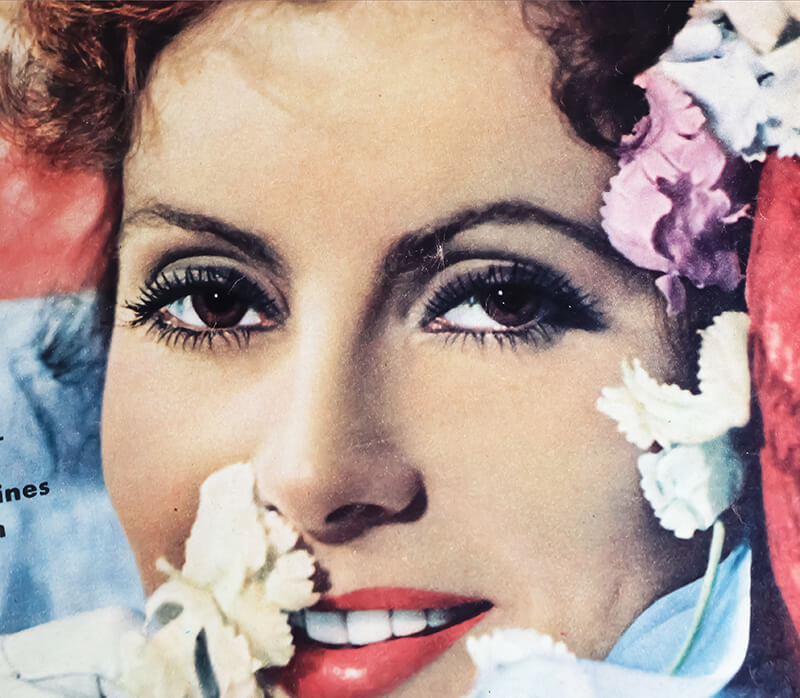
Was cinema’s most elusive star a temperamentally distant recluse—or simply a woman managing a chronic, debilitating autoimmune disorder?
Whenever my B12 and iron levels start to drop due to my autoimmune Pernicious Anaemia, I find myself deeply channelling Greta Garbo. The bone-deep exhaustion sets in, the brain fog rolls over, the sensory overload becomes overwhelming, and my internal voice whispers her most iconic, heavily quoted line:
“I want to be alone.”
(Though as any silver-screen enthusiast will correct you, what Garbo actually said in 1932’s Grand Hotel was: “I want to be alone… I just want to be alone.” In real life, she later clarified: “I never said, ‘I want to be alone.’ I only said, ‘I want to be let alone.’ There is all the difference.”)
For nearly a century, Hollywood history treated Garbo’s reclusiveness, her sudden studio walkouts, her light filming schedules, and her intense demand for privacy as the mysterious eccentricities of an enigmatic diva. But a growing body of historical evidence—recently brought to my attention through conversations with Scott Reisfield, Garbo’s great-nephew and author of Greta Garbo and the Rise of the Modern Woman, suggests a far more human reality.
Garbo wasn’t just guarding her privacy. She was most likely managing living with Pernicious Anaemia.
The Clues in the Hollywood Archives
In Hollywood, studio publicists during the 1920s and 1930s were masters of misdirection. When stars were gravely ill, newspapers reported “indigestion” or “exhaustion.” Yet, if you look closely at newspaper reports, studio archives, and private correspondence from Garbo’s life, a distinct clinical picture begins to emerge.
In late April 1927, production on MGM’s film Love (an adaptation of Anna Karenina) ground to a sudden halt. The New York Daily News reported on 30th April that Garbo had been “taken ill with an intestinal infection on the lot… and rushed to a hospital.” Her co-star Ricardo Cortez later recalled to historian Kevin Brownlow that filming was suspended for weeks because Garbo was down with “anemia of sorts.”
According to studio notes, her physician, Dr. Gustav Bjorkman, noted an underlying condition linked to her GI distress: Pernicious Anaemia.
The “Hydrochloric Acid” Smoking Gun
Perhaps the most compelling piece of direct evidence comes from Garbo’s own words describing her stomach issues:
“I’d adore to eat right now, but I can’t. I happen to have a very peculiar stomach department, I haven’t got enough things to digest food with… If you don’t have hydrochloric acid or whatever it is, then the stomach goes on strike.”
This “peculiar stomach department” is classic achlorhydria—the lack of hydrochloric acid in stomach secretions caused by parietal cell atrophy, the hallmark biological mechanism of Pernicious Anaemia that prevents the body from absorbing vitamin B12.
“Is Garbo Doomed?”: The Fan Magazines Take Note
While studio bosses fretted over lost revenue—the shutdown of Love cost MGM an eye-watering $200,000 in 1927 before they restarted production—the press speculated endlessly. A June 1931 article in a popular fan magazine boldly ran the headline: “Is Garbo Doomed?”
Written by Edward Churchill, the piece claimed that a physician attending to her in Santa Monica confirmed: “Greta Garbo has Pernicious Anemia… If medical science is correct, the fate of the great Garbo is sealed.”
While fan magazines of the era were notoriously sensationalist, the details Churchill included were surprisingly specific: describing her strict dietary regimens, her desperate need to conserve strength between takes, and her frequent retreats to Swedish sanatoriums and rest homes. Between 1935 and 1936, Garbo spent months in Sweden battling a prolonged illness, returning to New York noticeably thin and openly telling reporters at a press conference that she had been very sick.
Re-evaluating “Temperamental” Behaviour
Scott Reisfield’s review of Garbo’s personal date books reveals a repetitive, relentless cycle of doctor’s appointments across years. Without context, a cynical biographer might dismiss her as a hypochondriac. But to anyone living with Pernicious Anaemia today, those appointments tell an entirely different story: a woman seeking ongoing, vital repetitive treatments to keep her body functioning.
Even early in her career, before her formal diagnosis, Garbo negotiated surprisingly light filming schedules with MGM. While film historians long assumed this was a shrewd business move or an artistic demand to protect her energy for dramatic roles, Scott’s research offers a poignant alternative: she was managing a chronic illness, Pernicious Anaemia.
Pernicious Anaemia causes profound physical fatigue, gastrointestinal distress, neurological impairment, and severe mood fluctuations when untreated or undertreated. To step onto a glaring movie set under hot studio lights, perform intense emotional scenes, and face relentless public scrutiny while suffering from cellular starvation requires superhuman willpower.
Her famous demands for quiet sets, screened-off filming areas, and absolute seclusion between takes weren’t diva behaviour—they were survival strategies.
The Legacy of a Legend
In the late 1920s and early 1930s, the very period when Garbo appears to have been struggling on the MGM lot, scientists were introducing liver-based treatments that transformed Pernicious Anaemia from a fatal illness into a manageable condition. It was an emerging science, however, and treatment was far from straightforward.
Garbo’s final released film was Two-Faced Woman in 1941, but contrary to the enduring myth that she simply abandoned acting and withdrew from public life, research by Scott Reisfield shows that she continued pursuing film projects for at least another fifteen years.
Several major projects came close to production. MGM cancelled The Girl from Leningrad. Louis B. Mayer declined to make Mourning Becomes Electra, despite interest from both Katharine Hepburn and director George Cukor. Garbo herself rejected the script for Women of the Sea. George Bernard Shaw opposed her casting in St. Joan, preferring an unknown actress. Meanwhile, both Duchess de Langeais and The Miracle encountered significant censorship obstacles. Many of these proposed films dealt with themes that challenged the social conservatism of the era, making approval difficult under prevailing censorship standards.
This revised perspective changes how we view the decades after 1941. Rather than a woman hiding from the world, Garbo appears to have been a woman whose creative ambitions repeatedly collided with the realities of the film industry and the censorship systems of her time.
Beyond the Myth of the Recluse
The image of Garbo as a lonely recluse has become so deeply embedded in popular culture that it is often treated as fact. Reisfield’s research suggests a different reality.
After leaving Hollywood, Garbo eventually made New York her home, but she remained remarkably active. She travelled extensively throughout the United States, Europe, and the Caribbean, often spending months abroad each year and frequently travelling with friends and family. Health problems do not appear to have significantly limited her movements until after a serious illness in 1988.
She also remained socially connected and visible in selective ways. Between 1945 and 1965 she sat for a number of portrait sessions with renowned photographers including Cecil Beaton, Hoyningen-Huene, Horst P. Horst, and Beauchamp. What she withdrew from was not life itself but the machinery of celebrity: film production, publicity campaigns, and press interviews.
Reisfield further argues that the “reclusive Garbo” narrative was actively cultivated by sections of the paparazzi press, which found that stories portraying her as an inaccessible mystery increased the commercial value of photographs taken during her private outings. In this view, the legend of Garbo’s isolation tells us as much about celebrity culture as it does about Garbo herself.
For those living with Pernicious Anaemia today, this may be the most inspiring part of her story. Chronic illness can require rest, privacy, and periods of withdrawal, but these are not the same as giving up on life. Garbo appears to have balanced the management of her health with meaningful friendships, travel, creativity, and personal independence for decades.
Living With Illness on Her Own Terms
I really hope that after the discovery of cobalamin in 1948 and the development of effective vitamin B12 injections, Garbo’s condition became easier to manage. Like many people with Pernicious Anaemia today, she seems to have taken a keen interest in understanding and managing her own health.
One important influence was European naturopath Gayelord Hauser, whom Garbo first met in the mid-1930s. Hauser began advising her on diet during this period, years before her Hollywood career ended. Throughout the following decades she followed carefully structured dietary regimens focused on nutrition, digestion, and overall wellbeing. Biographical accounts and medical historians note that gastrointestinal problems continued to affect her throughout much of her adult life.
She died in 1990 at the age of 84, with pneumonia and renal failure listed as the official causes of death.
Perhaps it is time to reframe the narrative entirely. Greta Garbo was not simply an unapproachable mystery who disappeared from the world. She was a talented and determined woman who appears to have managed a chronic autoimmune illness while sustaining friendships, travelling widely, pursuing creative projects, and navigating the intense pressures of celebrity. Rather than asking to be alone, she may simply have been asking, as she said herself, to be let alone.
Further Reading
Special thanks to Scott Reisfield for sharing his historical research and insights into Greta Garbo’s health history. You can explore more about her remarkable life and archival photographs in Scott’s books, Garbo: Her Life + Photos and Greta Garbo and the Rise of the Modern Woman : Reisfield, Scott: Amazon.co.uk: Books

0 Comments