

B12: The Essential Molecule We Can’t Live Without
Vitamin B12, also known as cobalamin, is a complex and essential nutrient that plays a vital role in keeping our bodies healthy. While it is most known for being found in meat and dairy products, the way it is produced for supplements and fortified foods is a fascinating feat of biotechnology.
What is Vitamin B12?
Vitamin B12 is a water-soluble vitamin that is essential for the normal functioning of the brain and nervous system, as well as the formation of red blood cells. Historically, it was discovered as the “extrinsic factor” that, administered via raw liver, could stop life-threatening megaloblastic anaemia. Whilst not a cure for the underlying cause of the anaemia, back in the early 1900s it was the only way to treat patients with severe fatigue and neurological symptoms caused by their body not absorbing B12.
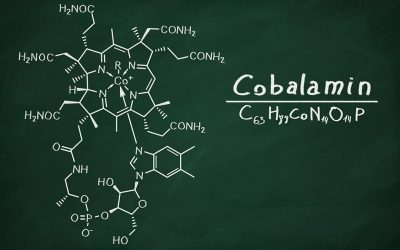
Unlike many other vitamins, B12 is unique because its structure contains a metal ion (cobalt) at its centre. Interestingly, humans and animals cannot make B12 themselves. We rely entirely on the work of microscopic organisms—certain bacteria—to create it for us.
How is it Manufactured?
Because the chemical structure of B12 is incredibly complex, it is nearly impossible to create it “from scratch” in a chemistry lab at a scale that is useful or affordable. While scientists were able to successfully synthesise it chemically, the process took over 60 steps and resulted in very low yields.
Instead, the industry uses a process called microbial fermentation. Essentially, scientists “hire” specific bacteria to do the work.
- Selection of “Workers”: Two main types of bacteria are used: Propionibacterium freudenreichii and Pseudomonas denitrificans.
- The Fermentation Process: These bacteria are grown in large tanks (bioreactors) filled with a nutrient-rich “broth” that includes sugar, nitrogen, and essential minerals like cobalt.
- Biosynthesis: Inside the bacteria, a series of about 30 enzymatic steps take place to build the B12 molecule.
- Extraction: Once the bacteria have produced the vitamin, it is extracted, purified, and converted into a stable form—often cyanocobalamin—which is the most common form found in supplements.
From Cyanocobalamin to Active Energy
While cyanocobalamin is the most common form produced industrially due to its stability and cost-effectiveness, it is not the “active” form your body uses. Once ingested or injected, your body performs a cellular “swap,” removing the cyanide molecule and replacing it to create hydroxocobalamin, and eventually the bioactive coenzyme forms: methylcobalamin and adenosylcobalamin.
Regardless of the final version, the vitamin is initially purified into a concentrated powder form. Manufacturers then distribute this powder to be either compressed into tablets or dissolved into sterile liquid solutions for clinical injections.
Where is it Used?
Vitamin B12 is a massive global market with applications in several key areas:
- Healthcare & Medicine: Used to treat deficiencies and manage conditions like anaemia or neurological disorders.
- Food Industry: Used to fortify cereals, plant-based milks, and energy drinks, which is especially important for people on vegan or vegetarian diets.
- Animal Feed: A significant portion of manufactured B12 goes into feed for livestock to ensure they stay healthy and grow properly as part of the food chain.
Key Issues Today
While industry is good at making B12, there are several challenges that organisations are currently working to solve:
- Efficiency and Cost: Scientists are looking for ways to make the bacteria produce B12 even faster and in higher concentrations to make supplements more affordable.
- Sustainability: Traditional fermentation can be resource-intensive, requiring a lot of water and energy. Modern industry research focuses on “green” bioprocesses that use less energy and fewer chemicals.
- Genetic Optimisation: There is ongoing work to “tune” the genetics of the bacteria to make them more resilient and productive, though this requires careful regulation and safety testing.
- Supply Chain: Currently, the global market faces a significant geographical imbalance, with approximately 90% of the world’s B12 produced in China. This creates a major geopolitical dependency for a nutrient that is essential for public health. As the global demand for plant-based diets grows, the need for reliable, large-scale B12 production is increasing rapidly, putting pressure on current manufacturing capabilities. The supply chain for Vitamin B12 is also facing unprecedented pressure as nutritional deficiencies generally rise worldwide.
This is driven by a “perfect storm” of factors:
- Dietary Shifts: Lower food quality and restricted diets.
- Medication Interference: Increased use of common drugs like metformin (for diabetes) and proton pump inhibitors, which are known to deplete B12 levels.
- An Aging Population: The risk of developing Pernicious Anaemia (an autoimmune condition which affects the absorption of B12) increases significantly with age: an estimated 20% of the elderly population.
As the global demographic shifts older, the demand for stable, high-quality B12 production has become a critical priority for global health.To mitigate these supply chain risks, there are organisations who are pioneering “synthetic biology” to decentralise production. By engineering common bacteria like E. coli to produce B12, researchers are developing “cleaner” bioprocesses that ensure almost 100% of the minerals used (like cobalt) are consumed by the bacteria.These efforts are vital to ensuring that as our population ages and dietary needs shift, we aren’t reliant on a single global source for this life-sustaining molecule. As with all research, this takes years of investment and human resource: the “end product” and benefits are still a long way off.
By understanding that vitamin B12 is not just a simple supplement but a complex product of global biotechnology, we begin to see the bigger picture of patient care. At the heart of the mission of the Pernicious Anaemia Society is the belief that a better-informed public and clinical community leads to better outcomes. When we understand the intricacies of how B12 is manufactured, the chemical conversions required for the body to use it, and the geopolitical pressures on its supply, we empower ourselves to advocate for more resilient healthcare strategies. Bridging the gap between industrial science and clinical practice ensures that as global demand rises and the risks of deficiency grow, we are better equipped to improve the early diagnosis and long-term treatment of Pernicious Anaemia, aiming to ensure no patient is left behind by a lack of knowledge or a strained supply chain.


Thank you for that information . The more we know about B12 , the better .
Thank you for all the information. I am learning as much as I can about Pernicious Anaemia so that I can fight for the correct treatment for myself. The lack of knowledge is shocking.
Wow, I had no idea what a complex juice 🥤 B12 is and the effect acid reflux medication has on B12
I suffer from pernicious anaemia and auto-immune gastritis. I was diagnosed by chance following a blood test for something else many years ago where the laboratory commented on my mis-shapen red blood cells. I cannot process cyanocobalamin injections as apparently my molecules don’t do the cyanide “swap” to enable the B12 to enter my cells. I couldn’t understand why I was still getting symptoms when I was having regular injections. Fortunately here in Australia we are not restricted to one every three months. What works for me is methylated B12 as a tablet placed under my tongue and allowed to slowly dissolve. I’ve been on it for around 5 years now and all seems well. I’m 80 years old and fortunately very active and do not appear to have any cognitive decline……..at least not at the moment.