

Personal Story
Anthony
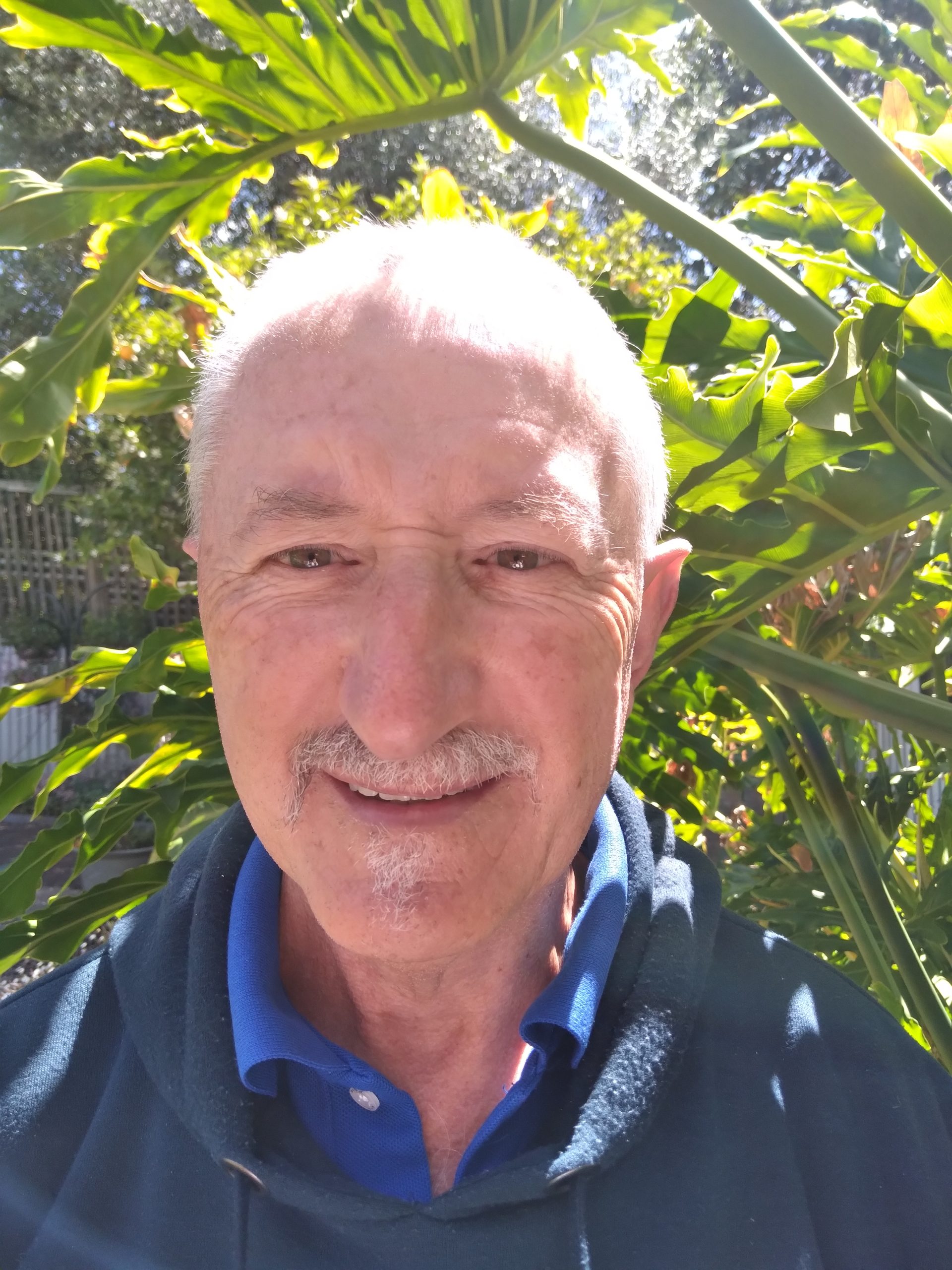
I’ve always regarded myself as being quite a healthy person. So, you can imagine my shock when I woke up one morning in mid-July 2025 with a tingling / pins and needles type feeling in my fingers and toes. I didn’t know much about pins and needles but what I did know is that it never ended well. I had never heard of Pernicious Anaemia (PA) or vitamin B12 deficiency (B12d). There was also possibly some loss of taste, some breathlessness and some brain fog. I say possibly because I contracted a nasty virus at roughly the same time, and these latter symptoms are also common to viruses.
The virus and these symptoms have now passed. Fortunately, my residual neuropathy symptoms in my hands/fingers and feet/toes are not painful although perhaps slightly uncomfortable occasionally but come with an awareness that something is not quite right. I do not look or act differently and so my family and friends are generally unconcerned although they probably do not really understand anything about PA and/or B12d.
So, the first thing that I did was to Google pins and needles Very quickly it seemed obvious that I had a B12 deficiency and possibly also PA. Next, I made an appointment to see my local GP. During my consultation I told my GP my symptoms as well as my internet assisted self-diagnosis. He tended to agree with me but arranged for me to have a blood test to confirm our thoughts. The blood test results duly confirmed our diagnosis. My total B12 level was a very low 109 pmol/L (recommended range is between 130 and 855) and Intrinsic Factor antibodies (IF Ab) and Gastric Parietal Cell antibodies (GPC Ab) were detected. These antibodies confirmed my PA.
The initial treatment recommended was B12 injections on a frequency of 3 weekly, (a total of 6) then quarterly thereafter. This sounded quite reasonable to a naive me at that time. I continued to search the Internet, and this is when I came across the Pernicious Anaemia Society (PAS) website. What a revelation! It was amazing! What I found most fascinating were the personal stories of medical/health challenges, great suffering, poor diagnoses (if at all) and undermedication over periods of years, if not decades. I will never forget the difficulties in getting GPs to, firstly, understand the PA problems and, secondly, to change their medical diagnoses in a proactive manner. With these stories ringing in my ears, I realised that my GP recommended injection treatment schedule could be grossly inadequate.
I started to become stressed and anxious about the thought of needing to discuss this with my GP in the hope of getting him to listen to my concerns and then to adjust the B12 injection protocol. Nevertheless, I quickly made another appointment with my GP. Fortunately, my concerns were unwarranted as he listened patiently and then altered the injection protocol to 3x per week. What a relief! I must have sounded very impressive as I quoted the PAS treatment recommendation for PA with neurological impairment not to mention the lessons learnt from the personal stories.
Around this time during my internet searches, I stumbled upon an Artificial Intelligence (AI) application (Microsoft Copilot). Wow, it was incredible! It didn’t matter what questions I asked or how I asked them, the responses were prompt, detailed and seemed medically logical and well researched. I learnt so much about the biological, neurological and functional aspects of PA and B12. But the biggest surprise was the ability to model various scenarios. I included in my questions my blood test metrics, intramuscular injection frequency and treatment timelines/milestones. The responses were very detailed and included in tabular form predicted levels of total and active B12, methylmalonic acid (MMA) and homocysteine as well as the progress of nerve regeneration and nerve functional recovery. Every scenario could also be compared to each other. My biggest issue with PA, apart from the disease itself, is not knowing when the active treatment will end and the life-long maintenance treatment commences. The scenario modelling gave me a good idea about this and showed the impact of the tapering of injection protocols. As a result, I am very wary of tapering too soon as symptoms may remain longer and may become irreversible – an outcome that I wish to avoid at all costs. When I asked, both GPs that I have been seeing admitted that they had never treated a PA case before.
From what I have seen so far, it is my opinion that in the future the PAS website could consider including some AI functionality. The result could be an incredibly powerful resource tool.
So, after 12 weeks (21 injections), I feel that my treatment is going well. I’m sure that my symptoms have improved even though the improvement is not linear or consistent and can be very frustrating. I want to maintain my aggressive IM injection protocol so that my tissue and neurological pathways are saturated with B12 as this will optimise nerve regeneration and recovery. After 9 weeks (12 injections), my active B12 was >128 pmol/L (recommended level is >35) – so I knew that I was on the right track. Overall, I think that I am lucky(?) as my symptoms seem quite mild. My philosophy has always been that the earlier that treatment commences, the better the outcome. As far as I know, there has not been any history of PA in my family although, in hindsight, I am wondering whether some of the symptoms displayed by some relatives may have been due to PA and/or B12. My GP is starting to talk about tapering the frequency of injections, but this worries me a little. I’ll have to have a discussion with him to see where this goes.
At this point, I would like to sincerely thank PAS, the PAS website and their dedicated volunteers for providing valuable information, support and guidance. I would certainly be in a far worse place without them. I would also like to thank the medical fraternity (researchers, scientists, specialists, doctors and nurses) who both treat and endeavour to find a cure for PA.
I’m hoping to update this story in 6-9 months by adding some good news regarding my recovery. I’m hoping for a full recovery. I would also like to pass on my best wishes to all PA sufferers and hope that their respective journeys meet their expectations.
I’ve chosen to write my personal story because I was inspired by all the other personal stories that I read, and I hope that it will help others on their journey.